Starting a Workout Routine (and Losing Weight) Without Getting Hurt or Quitting
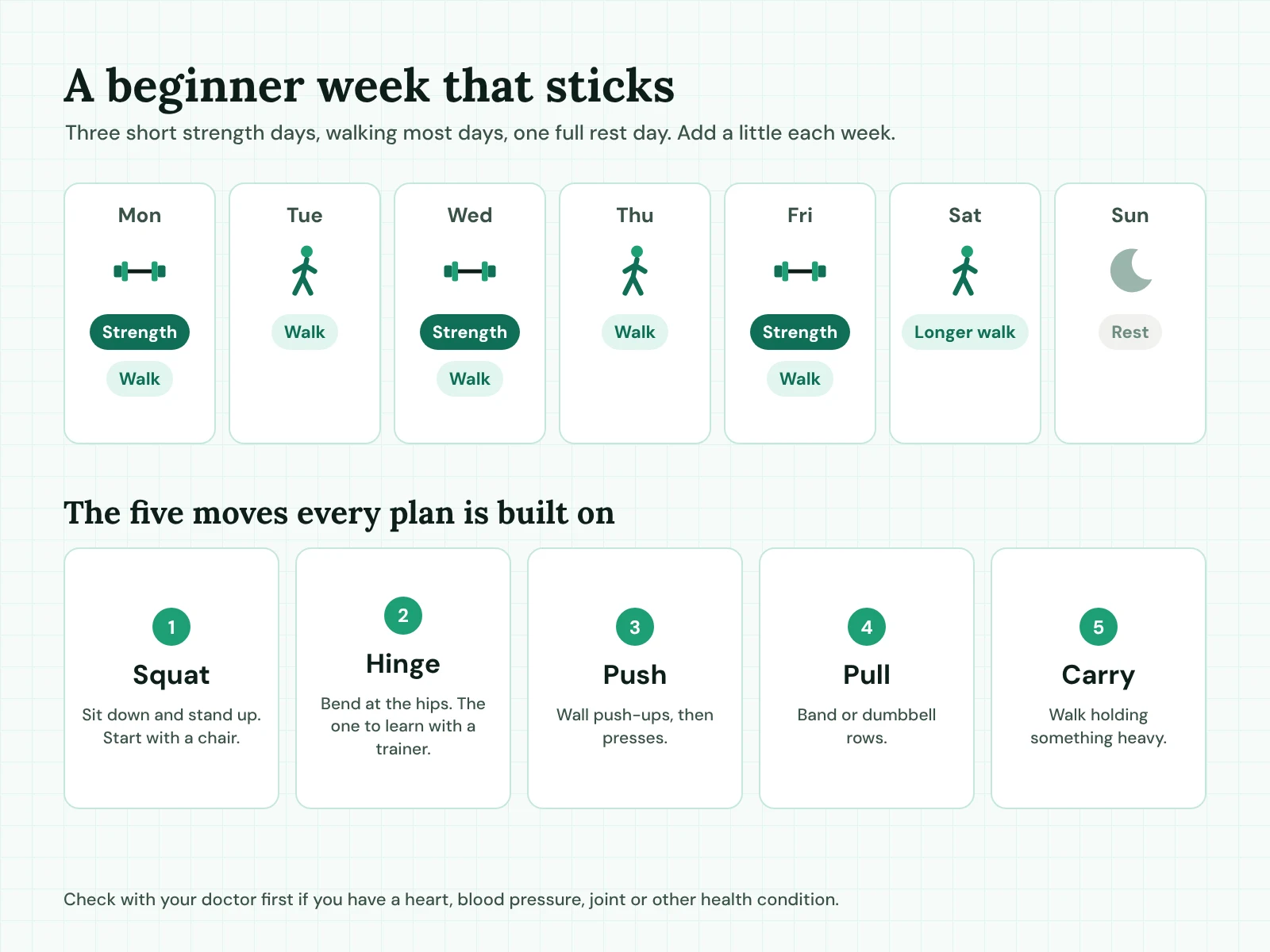
Start with three short full-body strength sessions a week plus regular walking, and add a little every week. Learn five basic moves with good form before adding weight. For weight loss, food changes do most of the work; exercise helps you keep muscle and keep the weight off.
Most people don't fail at working out because they're lazy. They fail because they start too hard, get sore or hurt, miss a week, and decide they're "not a gym person." A good start fixes all of that, and you can set most of it up yourself.
Start with a safety check
If you have a heart condition, high blood pressure, diabetes, joint or back problems, are pregnant, or you get chest pain, dizziness or shortness of breath when you're active, talk to your doctor before you start. That's not a reason to skip it. It's how you start the right way.
The simplest plan that works
US health guidelines suggest 150 to 300 minutes a week of moderate activity (brisk walking counts) plus muscle-strengthening on 2 or more days. If you're starting from the couch, don't try to hit that in week one. Build toward it.
A beginner week that works for most people:
- 3 strength sessions (say Monday, Wednesday, Friday), 30 to 45 minutes, full body each time.
- Walking most days, starting wherever you are and building toward 30 minutes.
- One full rest day.
Five moves that cover almost everything
Every beginner program is built on the same five movement patterns:
- Squat. Sitting down and standing up. Start with a bodyweight squat to a chair.
- Hinge. Bending at the hips, like a deadlift. This is the one most people get wrong, and it's where backs get hurt.
- Push. Push-ups (start on a wall or counter), then dumbbell presses.
- Pull. Rows with a band or dumbbell.
- Carry. Walking while holding something heavy in each hand.
Two or three sets of 8 to 12 reps of each, with a weight you could lift a couple more times, is plenty to start. Get the form right first, then add weight.
Add a little every week
Your body adapts to what you ask of it. Each week, add one thing: one more rep, a little more weight, or a few more minutes of walking. Write it down. A simple log is the difference between "I think I'm getting stronger" and knowing it.
Weight loss, honestly
Exercise matters for your health whether or not the scale moves. For weight loss specifically:
- Food does most of the work. Exercise alone rarely drives big weight loss. It helps you keep muscle and keep the weight off once it's gone.
- Slow is how it lasts. The CDC notes people who lose about 1 to 2 pounds a week are more likely to keep it off.
- Simple changes beat strict diets. Protein at each meal, fewer sugary drinks, more vegetables, less late-night snacking.
- Sleep counts. Short sleep makes hunger and cravings harder to manage.
If you have a medical condition, take medication, or have a history of struggling with food, a doctor or registered dietitian is the right person to help with the eating side.
Where to train
- At home: walking plus bodyweight moves and a pair of dumbbells covers the first few months.
- A gym membership: works if it's close and you'll actually go.
- An AlongSide gym Space by the hour: book a gym Space on AlongSide when you want real equipment without a membership or contract. Pay for the hour, come alone or add a trainer to the booking.
Where a trainer beside you earns their keep
You don't need a trainer forever. You need one at the start, for the moves that are easy to get wrong and expensive to learn the hard way, especially the hinge and loaded squats. A few Sessions with a trainer working alongside you, watching your form and setting your starting weights, gives you a plan you can run on your own after that.
Want it step by step, with printouts? Take the free AlongSide Course, Start a Workout Routine That Sticks.
Checklist
Starting a Workout Routine (and Losing Weight) Without Getting Hurt or Quitting
0 of 13 done
Before you start
Your first month
Food and recovery
Want someone who knows standing next to you?
Find a trainer near you →The Field Guide is written by AlongSide.Guide. AlongSide connects you with Guides who get paid to work alongside you, and some links on this page go to it.
Questions people ask
Your three options
Guides who do this
No Guides for this yet. Know this job? Be the first, and your Offer shows up right here.
Know this job? Become a Guide.
Become a Guide →Related Ideas
This guide was written by AI and hasn't been reviewed by a person yet. Know this subject? Sign up free as a Guide, add your credentials, and submit a review. Every review is checked by our team. If it's approved, your name and credentials go on this guide as its reviewer, linked to your Offers.
Sign up free as a Guide →